Shakadoo

Everything to do with your shak.

  • Home
  • About Us
  • Advertise
  • Contact Us
  • Press
  • Privacy Policy
You are here: Home / Archives for foreclosures

What to Do When Facing Foreclosure

by Miranda Marquit 1 Comment

Sign Of The Times - Foreclosure
Image by respres via Flickr

Foreclosure continues to be a very real concern. Indeed, Fed Chair Ben Bernanke thinks that the foreclosures will peak in the second half of this year. So we’re not out of the woods yet. If you are concerned about foreclosure — and think you might be facing it — there are some things you can do.

First of all, you should contact your mortgage lender. The sooner your lender knows about the problem, as well as your desire to prevent foreclosure, the more likely you are to find a solution of some sort. Cash Money Life rounded up some good suggestions from a number of sources about what you can do if you are are facing foreclosure:

* Loan modification.

* Short sale.

* Refinance.

* Rent out the house or take on a boarder.

* Save more money.

* Look for ways to earn more money.

Of course, foreclosure still remains an option. It is vital, though, that you determine how far you are willing to go to save the house. If you aren’t willing (or wholly unable) to do what it takes, a foreclosure might be your only option. Just remember, though, that a foreclosure can be devastating to your credit score, and remain on your credit report for up to 10 years (although it is usually removed in 5-7 years). It is possible to buy another home after a foreclosure, but it usually takes at least 3 years of serious work on your credit score to do so.

Reblog this post [with Zemanta]
+1
Tweet
Share
Share
Pin
Shares 0

Friday Fun Video: Countrywide Commercial

by Miranda Marquit Leave a Comment

This is an actual Countrywide commercial. From a ways back. You know, before we found that there is a reason some people don’t qualify for home loans. I thought it was funny — in a sad sort of way.

Happy Friday!

Reblog this post [with Zemanta]
+1
Tweet
Share
Share
Pin
Shares 0

Home Prices Continue to Slide in the U.S. and Europe

by Miranda Marquit Leave a Comment

Home prices continue to slide in both the U.S. and in Europe. Indeed, home prices in the U.S. slid 14% on the year, according to the Financial Times. Recovery is expected to move slowly, thanks to these housing declines. Home price declines affect the equity in homes, meaning that fewer people can use them to shore up their finances. Additionally, construction investment is declining thanks to these issues. This leads lower confidence and less money circulating in the markets.

Another issue, reports the Financial Times, is the fact that banks — already troubled — will have to deal with the burdens of more painful mortgage defaults:

“Falling house prices do not necessarily mean there’ll be more [mortgage] defaults,” said Dirk Schumacher, an economist at Goldman Sachs in Frankfurt.

“But the defaults that will come could be more costly for the banks.”

In the end, home prices will need to pick up if the economy is to recover. Along with employment, the housing market is one of the most important aspects of economic recovery.

Reblog this post [with Zemanta]
+1
Tweet
Share
Share
Pin
Shares 0

Tent Cities on the Rise Thanks to Foreclosures

by Miranda Marquit Leave a Comment

Renee Hadley sits o...
Image by Getty Images via Daylife

Every year, I go camping with my family. I load up, and meet my parents, siblings and their families in some woodsy location and pitch a tent. Here in the U.S., living in a tent for a few days is recreation. Unfortunately, as foreclosures rise and things continue to go downhill, people in the richest country in the world are living in tents out of necessity. With foreclosures and job losses on the rise, tent cities are popping up around the country. US REO Properties reports on the advent of tent cities:

The big cities like Los Angeles and New York are one of the worst affected but the smaller towns have not been spared. Here too the people who have become unemployed and lost their houses to foreclosure are settling down in newly formed tent cities out of the sheer need to survive. The Associated Press reports that 61% of the homeless coalitions (local and state) report that there has been a sharp increase in homelessness.

Speaking to New York Times, Peter Stack the manager of homeless centre operations in Fresno said, “They just popped up about 18 months ago. One day [the railroad lot] was empty. The next day, there were people living there.”

Homelessness on this scale has not been seen for decades. And, even though our economy is nowhere close to a Depression, the only comparable image involves tent cities, “Hoovervilles“, set up during the Great Depression.

Reblog this post [with Zemanta]
+1
Tweet
Share
Share
Pin
Shares 0

Foreclosures Continue; Prime Loans Seeing an Increase in Foreclosure

by Miranda Marquit 1 Comment

Foreclosures are still spiraling out of control on the housing market.The good news that pending home sales are up has been overshadowed by the fact that the tide of foreclosures continues to rise. According to Mish’s Global Economic Trend Analysis, prime loan delinquencies have doubled, and foreclosure filings have exceeded 300,000 for three months in a row. However, there are hopes that the foreclosures will begin to subside as Barack Obama’s foreclosure prevention measures begin to bear fruit. Bloomberg reports on some of the hopes for the housing market future:

“I’m very concerned about the rise in delinquent mortgages and foreclosure actions,” Comptroller of the Currency John Dugan said in a statement with the report. President Barack Obama’s plan to create “sustainable, payment-reducing modifications is a positive step that should show significant benefits in the coming months,” Dugan said.

For homeowners trying to sell their homes fast, this represents yet another stumbling block. It is hard to compete with distressed homes, and as long as there is a glut of foreclosures on the market, other types of homes will have a harder time making headway.

Reblog this post [with Zemanta]
+1
Tweet
Share
Share
Pin
Shares 0

Four Alternatives to Foreclosure

by Miranda Marquit Leave a Comment

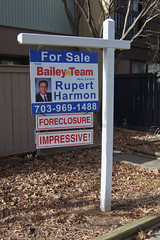
Foreclosure - Impressive!
Image by joelogon via Flickr

It is possible to avoid foreclosure. However, it does require some planning. The first thing you need to do is notify your mortgage lender immediately when you feel that you might be in danger of foreclosure. Keeping your situation from your mortgage lender until nothing can be done is a sure-fire way to end up in foreclosure proceedings, with very little recourse. The key is to let your mortgage lender know ahead of time that you might hit a rough patch, and let your lender know what you plan to do to get through it.

Real Estate Pro Articles offers four alternatives to foreclosure that your mortgage lender might be willing to consider before exacting the ultimate penalty:

1. Refinance: This is the first option. You refinance the remainder of your home mortgage loan for 30 years. This extends your loan term, spreading what’s left of your mortgage loan out and lowering your payments to something affordable.

2. Loan modification: There are government programs designed to help qualified home owners get loan modifications. This changes the terms of the loan without going through the refinancing process. Whether principal is reduce, interest is reduced or the term is lengthened, the goal is to end up with an affordable payment.

3. Repayment plan: This is a separate plan, set up by the mortgage lender, to allow you to repay the amount you owe in back payments. The plan often comes without charges for extra interest (although you have to pay your regular interest.

4. Short sale: This is when you get permission from the mortgage lender to sell your home for less than what you owe on it. The difference is “forgiven”, and the lender gets as much as possible, without having to take over ownership of the home through foreclosure. You get to walk away without a foreclosure staining your record.

In the end, it depends on your financial situation and the local market. In some cases, there is little to be done other than foreclosure, due to an inability to pay even the modified amount.

Reblog this post [with Zemanta]
+1
Tweet
Share
Share
Pin
Shares 0

Religious Groups Help Victims of Foreclosure

by Miranda Marquit 1 Comment

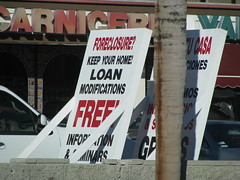
loan modifications
Image by TheTruthAbout… via Flickr

With the tide of foreclosures likely to continue rising, many different groups are trying to get in the act of helping the less fortunate. Religious groups in some of the hardest-hit areas of the country are trying to help. US REO Properties reports on some of the efforts being made by religious groups:

The religious groups have set up emergency food outlets, created job banks and are conducting classes on how to meet the challenges of life as well as financial education.

Of course, if you are looking to avoid foreclosure to begin with, you might try home loan modification through your lender. You can get information on government programs that can help you avoid foreclosure by visiting the Web site set up to explain the Making Home Affordable program.

It can be difficult to get through a foreclosure — or avoid one — but if you know where to look, you can usually find a measure of help and support.

Reblog this post [with Zemanta]
+1
Tweet
Share
Share
Pin
Shares 0

Foreclosures: The Tide is Likely to Continue to Rise

by Miranda Marquit 2 Comments

Sign Of The Times - Foreclosure
Image by respres via Flickr

Foreclosures continue to offer problems to the U.S. housing market and, by extension, to the rest of the U.S. economy. And the tide of foreclosures is not expected to abate any time soon. Even with efforts by the President and his advisers to try and reduce foreclosures, there are some fundamental issues with the attempts at foreclosure prevention. The New York Times reports on one of the issues with foreclosure prevention:

One of the biggest problems is that the plan focuses almost entirely on lowering monthly payments. But overly onerous payments are only part of the problem. For 15.4 million “underwater” borrowers — those who owe more on their mortgages than their homes are worth — a lack of home equity puts them at risk of default, even if their monthly payments have been reduced. They have no cushion to fall back on in the event of a setback, like job loss or illness.

Indeed, what happens if something devastating happens? The lower payments won’t stop foreclosure in those cases. And with the economy still in recession, job loss is still an issue. The New York Times believes that principal reduction is the answer. However, I think most mortgage lenders would balk at such a measure. Perhaps another mortatorium on foreclosures is in order, one aimed at those experiencing financial hardship due to the recession.

Do you think anything can help stem the tide of foreclosures?

Reblog this post [with Zemanta]
+1
Tweet
Share
Share
Pin
Shares 0

Foreclosure Starts Jump in Quarter 1

by Miranda Marquit 2 Comments

Housing market news continues to be mixed right now on the latest foreclosure numbers. After showing that existing home sales increased in April, as did new home sales, the foreclosure data was released. For Quarter 1 of 2009, the data shows a sharp increase in foreclosures. Indeed, the jump between foreclosures in Quarter 4 of 2008 and Quarter 1 of 2009 was the largest recorded quarter to quarter jump.

The reason for this sharp increase probably has to do with the fact that in Quarter 4 of 2008, many mortgage lenders offered a moratorium on foreclosure. These lenders did so in order to promote holidays with less stress for borrowers. However, the moratoriums were ended in Quarter 1 of 2009, and now we are seeing an increase in foreclosure.

Foreclosure starts are also on the rise. Foreclosures are likely to continue until the economy picks up. However, there may be some help from government programs put into place to help ease foreclosure. Loan modification — if mortgage lenders will participate in programs set up for the purpose — could help prevent some foreclosures.

Reblog this post [with Zemanta]
+1
Tweet
Share
Share
Pin
Shares 0

Spending Priority #1: Making Your Mortgage Payment

by Miranda Marquit 4 Comments

Inevitably, as tough times continue, I get questions similar to this in my email inbox:

“I am having trouble meeting my obligations. My hours have been cut at work due to the recession, and things are getting tougher. I am trying to decide between making my credit card payments and paying my mortgage. What should I do?”

The answer to this question is very simple: Pay your mortgage first. You should make your mortgage payment your first priority. Your credit card debt is unsecured. Your mortgage, on the other hand, is secured by your home. Your credit score may be in trouble if you miss credit card payments, but it will be in much worse shape if you go through foreclosure. And you could lose your home.

When it comes to the choice between your mortgage payment and your other bills, making your mortgage payment should be your first option. In fact, just about everything, from insurance to groceries to utilities, should be put ahead of credit cards when the tough decisions have to be made.

And, if you are running into trouble, you should contact your mortgage lender as soon as possible to talk about home loan modification, forebearance or other options that can help you keep on your feet until this recession is over and things pick up again.

Reblog this post [with Zemanta]
+1
Tweet
Share
Share
Pin
Shares 0
« Previous Page
Next Page »

Subscribe to the Shak

Copyright © 2023 · Shak Media · All Rights Reserved