Shakadoo

Everything to do with your shak.

  • Home
  • About Us
  • Advertise
  • Contact Us
  • Press
  • Privacy Policy
You are here: Home / Archives for foreclosures

Refinancing Your Mortgage

by Miranda Marquit 7 Comments

One of the ways that some people at as a way to forestall foreclosure is to refinance. However, refinancing your mortgage is not always a walk in the park. First of all, it is important to realize that, even though mortgage refinance rates are low, you may not qualify for the best refinance interest rates. But you can move on from there. Here are some things that you need if you are interested in refinancing your mortgage:

1. Steady income. If you are interested in refinancing, you need to have a job.

2. Equity in your home. Your home should have some equity built up. With Making Home Affordable, you can get away with no equity in your home, but you have to qualify for the program. Most lenders want you to have at least 20% equity in your home.

3. Reasonably good credit. Your credit needs to be fair to excellent. Some mortgage lenders won’t accept fair. You will need to have a good payment history as well if you want to refinance.

4. Making Home Affordable. If you want to take advantage of Making Home Affordable, you will need a mortgage serviced by Fannie or Freddie. You can look up whether you are serviced by going to www.fanniemae.com/loanlookup or www.freddiemac.com/mymortgage.

You should start by going to your current mortgage lender and seeing what is available. Figure out your options. Whether you have good credit and are looking for a lower interest rate, or whether you are hoping that refinancing can help you improve your financial situation, your first step is to talk to your mortgage lender. And, if you feel that you can do better, consider shopping around.

Reblog this post [with Zemanta]
+1
Tweet
Share
Share
Pin
Shares 0

Get Real Help for Your Foreclosure Prevention

by Miranda Marquit 1 Comment

Sign Of The Times - Foreclosure

Image by respres via Flickr

One of the things you have to watch out for when you are in danger of foreclosure is falling prey to foreclosure rescue scams. These scams either take your money as you pay for help, or they set up some convoluted system wherein someone else ends up with ownership of your home. It is true that there are some who can help you avoid foreclosure for a fee (attorney fees are around $2,000 for loan modification). Before you pay a fee, though, you should be careful. Here are some tips that can help you prevent becoming a victim of a foreclosure scam:

* Pay your mortgage only to your lender during the loan modification period. Do not pay your mortgage to anyone else, or into a “secure” account.

* Don’t pay the entire fee up front.

* Get everything in writing.

* Have a trusted adviser go through a contract before you agree to sign.

* Do not agree to give anyone the deed, for any period of time.

Instead of looking around yourself, and answering ads, you should first look for foreclosure prevention help from reputable sources. There are helpful resources available from the Department of Housing and Urban Development, as well as NeighborWorks America. Check these places first to find reputable housing counselors that can help you find foreclosure prevention help for little to no cost.

Reblog this post [with Zemanta]
+1
Tweet
Share
Share
Pin
Shares 0

Why Buy a Distressed Home?

by Miranda Marquit 1 Comment

After seeing this hole in a Canton kitchen cei...
Image by MichiganMoves via Flickr

With the housing market still struggling (although it is showing improvement), there are plenty of deals to be had. It is possible to get some exceptionally good deals on distressed homes. These are homes that are either in foreclosure or pre-foreclosure, or that have been vacant. Real Estate Pro Articles reports on why buying a distressed home can be a good move:

Low investment – Distressed homes are usually available at anywhere between 20-50% below the current market value and therefore involve very low investment costs.

High resale value – By buying a distressed home at a good bargain one can invest some money in renovating the property and then sell it immediately at a much higher price and earn a very good profit.

Low risks – As most distressed homes are government or bank owned and has a very transparent purchasing process, a distress home involves much lower risks as they are free of all liens in contrast to other real estate purchases.

Of course, you still need to be careful when you buy a distressed home, and be aware that there are still risks. You want to make sure that the title really is clean. And you also want to understand what you are getting into. In many cases, distressed homes are in poor shape, and may require some repairs. In the most extreme cases, you may have to get building permits to properly make renovations.

Reblog this post [with Zemanta]
+1
Tweet
Share
Share
Pin
Shares 0

Watch Out for Foreclosure Rescue Scams

by Miranda Marquit 2 Comments

An aerial view of homes ...
Image by Getty Images via Daylife

Right now, there are a number of people in trouble with their home mortgage loans. Indeed, with unemployment still quite high, and the recession only just beginning to come to a close, many are still struggling with foreclosure. It is important to note that there are programs out there meant to help you with loan modification or by other means to avoid foreclosure. But there are also number of scams.

Scammers intent on taking advantage of those in unfortunate circumstances are offering foreclosure rescue services — only to pull the rug out. Foreclosure rescue scams are on the rise as the unscrupulous offer to help with a loan modification or use some other method of “rescue.” Victims pay money up front, or even sign over the deeds to their homes. Then, of course, the scammer makes off with the money or sells the home they now own (or both), and the victim is in even worse shape.

The Department of Housing and Urban Development has an informative Web site that addresses foreclosure, and provides you with contact information for legitimate entities that might be able to help you.

Reblog this post [with Zemanta]
+1
Tweet
Share
Share
Pin
Shares 0

Pending Home Sales Continue to Rise

by Miranda Marquit 2 Comments

A Nalukettu traditional Kerala house in India
Image via Wikipedia

For the sixth month in a row, pending home sales have risen. The numbers coming out of July show an increase of 3.2% in July, and that was after pending home sales increased by 3.6% in June. This trend shows that there is continued interest in buying a home right now. Which is not surprising.

Government home mortgage programs have been providing an impetus to buy. It is especially tempting for first time home buyers who have access to a rather generous tax credit when they buy a home. However, time is drawing short for the first time home buyer program. The homes have to be closed on by November 30, 2009. If you take into consideration that it takes 30 – 60 days to close on a home mortgage loan, it is important to realize that you only have about a month to get moving on buying a home if you want the tax credit.

Low prices on foreclosures are also providing a catalyst for home buying, and low mortgage interest rates have had their place as well. However, it is worth noting that as demand continues to rise, things might change.

Reblog this post [with Zemanta]
+1
Tweet
Share
Share
Pin
Shares 0

Mortgage Lenders Facing Learning Curve for Loan Modification

by Miranda Marquit 6 Comments

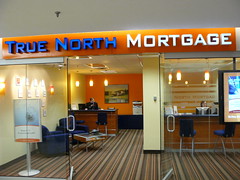
True North Mortgage store front
Image by k-ideas via Flickr

Mortgage lenders are facing a rather steep learning curve right now as the struggle to keep up with loan modifications and other programs instituted by the government in the hopes that foreclosures can be prevented. MarketWatch reports on the challenges faced by mortgage lenders right now:

Most mortgage lenders have always had some form of loan-workout program for troubled borrowers. But those programs were relatively small, and in the boom times were in slight demand since rising home prices and a brisk sales market made getting out from under an onerous loan relatively easy. So when the bust first hit, there wasn’t much that could get done.

For the most part, mortgage lenders were not ready for the influx of mortgage related issues. Some mortgage lenders have managed to pull it together and modify loans and find other solutions to mounting foreclosures, but many are still struggling to put proper systems in place and work out qualifications and other issues.

For homeowners looking for loan modification and other solutions to a possible foreclosure, it means a certain amount of patience, and the realization that it my take some time to work things out.

Reblog this post [with Zemanta]
+1
Tweet
Share
Share
Pin
Shares 0

Single Families Continue to See Delinquencies

by Miranda Marquit Leave a Comment

Last week, the Mortgage Bankers Association reported that single family mortgages are in delinquency at a rate of 13.16%. This is a new record for single family delinquencies. It tells the tale of a likelihood of increasing foreclosures. It also points out the difficulties that many families are facing during this recession.

With unemployment still rising (albeit at a slower pace), and with budgets tight, it is little surprise that families are having to make difficult spending choices. However, it is important to remember that your mortgage is one of the most important payments that you can make. Indeed, it represents your living space. If it is a choice between the mortgage and credit card or other debt, it is often best to choose the mortgage. Avoiding foreclosure, if you can, is important.

However, the rising delinquencies are probably an indication that things for some families have reached a point where that decision is not an option. Instead, for many, it is becoming a choice between paying the mortgage and buying food.

Reblog this post [with Zemanta]
+1
Tweet
Share
Share
Pin
Shares 0

After Foreclosure: Renting

by Miranda Marquit Leave a Comment

foreclosure sign
Image by TheTruthAbout… via Flickr

Foreclosure is one of the most difficult things to deal with. However, there are options for after foreclosure. While you probably will not be able to buy a home immediately, you can usually find a way to rent. Unfortunately, many landlords are interested in your credit score, and a foreclosure can leave you with serious credit problems initially. CNN Money reports on what one family did in order to get around this problem:

In April, having saved what they would have paid in mortgage, they relocated to Elyria, Ohio, where Stephanie has relatives. Unfortunately, their credit scores had dropped so low that it was difficult to rent — much less buy — a new place. So Stephanie’s mom bought a house and rents it to them.

Of course, not everyone has this option. However, there are some landlords who might be willing to take a chance on you if you are willing to pay a higher security deposit. You may also be able to explain extenuating circumstances that led to the foreclosure, such as job loss, illness or some other misfortune. Some are understanding. But you may have to prove that you can make the rental payments.

There are also opportunities to rent the home from the new owners. However, such positions, including right-to-rent, are not usually overly attractive to homeowners who have been dispossessed.

Reblog this post [with Zemanta]
+1
Tweet
Share
Share
Pin
Shares 0

Genworth Keeps Homes Out of Foreclosure

by Miranda Marquit 1 Comment

Genworth Financial Headquarters
Image by taberandrew via Flickr

Recently, there have been some accusations made that mortgage lenders and servicers have been slow to help borrowers avoid foreclosure. Since most of the foreclosure prevention programs in place are voluntary, mortgage lenders can decide how active a role they want to play in keeping borrowers in their homes. It appears, though, that Genworth Financial is interested in helping homeowners.

Genworth recently released a scorecard showing its efforts at foreclosure prevention over the past 12 months. HousingWire reports on Genworth’s claims:

The scorecard, which covers the 12-months from July 1, 2008 to June 30, 2009 showed that Genworth saved $2.3bn in mortgages. It also shows a 51% surge over the same period last year as a result of an increase of loan modifications, which accounted for 41% of the workouts. …

Genworth “cured” 86% of the renegotiated loans, meaning that the borrower stayed in the home and became current on the mortgage.

This is an encouraging number, which shows that some mortgage servicers see that it is in their best interests to help homeowners stay in their homes if possible. While some borrowers are unable even to afford the terms under a loan modification, perhaps other mortgage lenders would have more success if they were willing to take the same steps as Genworth.

Reblog this post [with Zemanta]
+1
Tweet
Share
Share
Pin
Shares 0

Could Right-To-Rent Help Fix the Foreclosure Crisis?

by Miranda Marquit 3 Comments

Half million dollar house in Salinas, Californ...
Image via Wikipedia

As foreclosures continue, even with government programs in place from the Bush Administration and the Obama Administration, there are concerns about what happens to empty homes. (I know all about this from experience; the house behind me has been foreclosed and vacant for a year and a half.) Vacant homes create problems for property values, as well as for the character of the neighborhood.

One proposal that is getting a fresh look is right-to-rent. CNN Money describes right-to-rent:

One proposal making the rounds in D.C. is Right to Rent: a program, first floated two years ago by liberal think-tanker Dean Baker, that would allow folks who have lost their home to foreclosure to continue living in the home as a renter.  As Baker sees it, giving the foreclosed the right to rent their home at a market rate for a long stretch (perhaps five to 10 years) is a win-win. The landlord (an investor or bank) gets market rental income, the homeowner isn’t uprooted, property values aren’t further depressed by foreclosure fire sales, and taxpayers aren’t asked to bail out lender or borrower.

The idea is that, instead of making mortgage payments, the homeowner is making rent payments. In many cases, market rental rates are lower than mortgage payments, so it could allow families to stay in homes. And, since the property isn’t vacant, it doesn’t have the same impact on property values.

Unfortunately, in practice this might be difficult. Setting rental rates is hard, and for some, living in a home they “bought” may not be so pleasant now that they are suddenly renters.

Reblog this post [with Zemanta]
+1
Tweet
Share
Share
Pin
Shares 0
« Previous Page
Next Page »

Subscribe to the Shak

Copyright © 2023 · Shak Media · All Rights Reserved