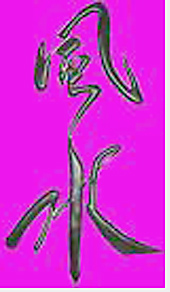
The Oriental concept of Feng Shui translates into the English words “wind and water” and concerns itself with an intangible energy known as chi, which has both positive and negative effects. Feng Shui must be experienced before it can be truly understood. The power of chi is everywhere in the universe betraying itself in our attitudes about life and landscape, which is the frame, either conscious or unconscious, that we place around our lives.
Feng Shui demands the placement of objects, especially graves, buildings and furniture in patterns of yin and yang and the flow of chi. The concept rests on the belief that there are five basic elements, some combinations of which create a positive cycle and some which are destructive. For optimum Feng Shui, any given room in a home should have an equal balance of all five elements: water, wood, fire earth and metal; none of them, however, being too overpowering
For optimum Feng Shui, all five elements must be present, none of them too intense. For example, a room dominated by metal elements can be counter-balanced by wood elements like leafy green plants or fire elements such as red throw pillows or even candles. Natural things fare well in implementing Feng Shui design in one’s home. The dual aspects of yin and yang always reign supreme with Feng Shui, as the ultimate goal is the harmonious balance between humans and natural objects.
There is much to say about Feng Shui and much more will follow in the next few blogs.
What do YOU think about Feng Shui for your home?
Leave a Reply